
We are thrilled to introduce the Great Fen's Mobile Inspiration Hub (MIH)! This long-anticipated arrival is a tiny-house on wheels made with paludiculture materials. The first of its kind in the UK, it will be taken on tour to demonstrate how crops being grown in our wetter farming trials can be processed into sustainable materials that have practical uses in construction and design. We hope to engage more people with the importance of peatland restoration, offering a multi-sensory and accessible experience.
The Tiny-House Arrives

Moor and More delivering the Mobile Inspiration Hub
Introducing the Mobile Inspiration Hub! This tiny-house on wheels is made with paludiculture materials and is the first of its kind in the UK!

Moor and More delivering the Mobile Inspiration Hub
The concept
In 2024, we invited contractors to tender for the fabrication of the MIH. This is a key step in the delivery stage of our National Lottery Heritage Fund Heritage Horizon project, Peatland Progress – A New Vision for the Fens. We wanted to produce a exhibit constructed in part or in whole of paludicultural materials (materials derived from crops grown at high water tables within a wetland system) with high sustainability credentials.
We were delighted to award the project to Moor and More in Germany. They are fast becoming the experts in the design and delivery of paludi-tiny-houses, using the latest scientific findings and collaboration with the University of Greifswald.

Moore and More’s concept design for the Mobile Inspiration Hub. Note, not all features have made it into the final construction.
Our intention is that the MIH will be a unique setting to showcase sustainability and climate change mitigation options, connecting people with nature. It will also demonstrate the potential end uses of materials derived from paludiculture. It will promote the concept of paludiculture (wet farming) to Great Fen visitors, farmers, growers, landowners, scientists, and policy makers. The best way to understand is to see, touch and experience the real thing. This mobile resource will be a beautiful and inspiring outreach tool.
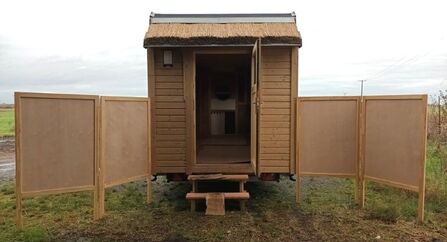
The Mobile Inspiration Hub will take paludiculture’s potential on tour. Credit - The Wildlife Trust BCN.

The Mobile Inspiration Hub will take paludiculture’s potential on tour. Credit - The Wildlife Trust BCN.
Inside the Mobile Inspiration Hub
Inside the tiny-house, you'll discover plants such as reed, Typha (also know as bulrush/cattail), alder and grasses that have been transformed into functional solutions. Typha-based furniture is useful, beautiful and innovative. Reed-based acoustic-baffle lamps line the walls and the traditional use of reed as thatching is seen on the roof. Reeds also feature as insulation, alongside Typha and wet meadow grass. Alder is used for plywood walls, worktop and other surfaces.
The space is multifunctional and equipped with electrical connections and infrared heating.

Alder plywood walls and reed acoustic baffles inside the Mobile Inspiration Hub. Credit - Moore and More
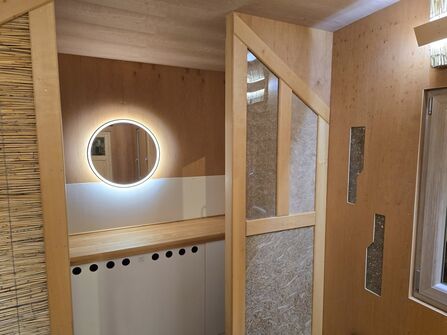
Construction materials are left on display for visitors to the Mobile Inspiration Hub. Credit - Moore and More.
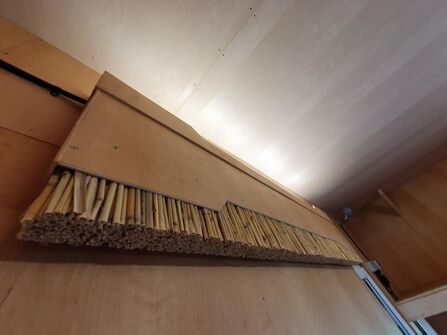
Reed provides sound absorption in the wall lamps
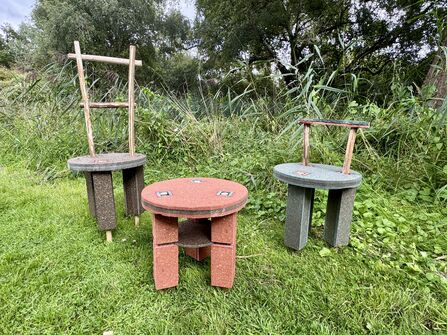
Examples of furniture made from paludicultural products. Designed and constructed during a STORE summer school workshop in the Great Fen. Credit - The Wildlife Trust BCN.
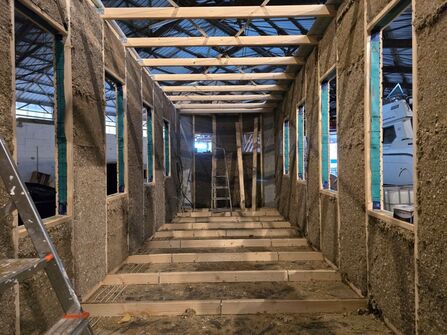
Walls are insulated with paludiculture materials such as reeds, Typha and grasses. Credit - Moore and More.
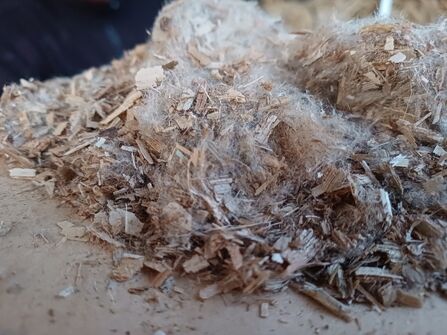
Paludi insulation material seen at Moore and More's workshop. Credit - Lorna Parker.
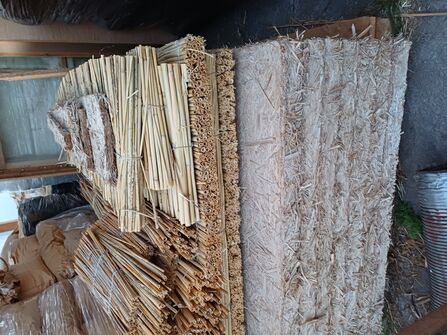
Raw materials for the construction of the tiny-house seen at Moore and More's workshop. Credit - Lorna Parker.
Sustainability was considered through every layer, as Torsten Galke, Moor and More, explains. "During the construction of the tiny house, we used paludi materials wherever it was possible and made sense. Anywhere else, we tried to choose building materials that could guarantee function and sustainability. Since weight is a limiting factor, we chose spruce for the wood, as it is relatively light, flexible and stable. The spruce cladding is protected against water by a pollutant-free impregnation made of silicates, which makes the wooden look weathered and is superior to other paints due to its stability. The rainwater is guided downwards in a rain gutter via a pipe and can be collected for re-use."
Helen Bailey, Great Fen Project Officer, said, “Britain now has its own paludi-tiny-house! We are so impressed with what Torsten and his team have achieved. This will be such a valuable tool to communicate the importance of protecting our peatlands, the process of paludiculture and the potential commercial uses of those crops. Thank you so much to everyone who was involved and to the National Lottery Heritage Fund for supporting this exciting project.”

Moore and More's name engraved and displayed on a paludi-plaque.
About Moor and More:
Moor and More develops and delivers climate-positive building materials, furniture and demonstrator buildings made from paludiculture biomass such as cattail (Typha), reed and wet-meadow grasses. The company links peatland restoration with regional value creation by making the sustainable use of rewetted peatlands visible, practical and tangible for the built environment.

An artists impression, watercolour painted, of what Speechly's Farm will look like after restoration. Artist's credit: John Walsom