
In the last couple of weeks, it felt like spring had sprung, with chiffchaff, corn bunting, reed bunting, stonechat, and yellowhammer, all singing in the Fen. Brimstone and peacock butterflies were on the wing, and male common toads were calling from the meres and ditches.
March sightings

Lapwing Vanellus vanellus sky dancing (territorial display) Rutland Water spring - David Tipling/2020VISION
Spring has sprung, with birdsong and plenty of wildlife on the move.

Mating toads trying to cross the road at the Great Fen by Henry Stanier
Wildlife is on the move, and in the coming weeks we will witness the return of migratory bird species to the Fen, while others just pass through. Various warblers will arrive in our wetlands and woodlands, while other birds may stop for a while before moving on to breeding grounds elsewhere. Waders will be appearing in the wetlands including curlew (already spotted), greenshank and redshank (spotted today). Do keep watching and listening out for these changes in your local wildlife; it is always exciting to catch the sound of your first singing chiffchaff or blackcap of the year.
Lapwings have been displaying over our wetlands, and shelduck have reappeared for the breeding season. Herons and egrets are becoming more active and birds of prey have also shown signs of courtship.
Members of the crow family do, of course, breed early in the year, and the raucous sounds drifting down from the rookeries have already begun as the rooks gather in their tree-top nesting colonies. Our resident song thrushes have also been vocal, while some of our wintering thrushes, such as fieldfare, have clearly been on the move back to Scandinavia
At this time of year, there are other insects on the wing. During the daytime, you might spot the hurried flight of a male emperor moth, as it whizzes past you, in contrast to the lazy drone of the many queen buff-tailed bumblebees, which have emerged from hibernation. At night, the number of moths on the wing is increasing, as we move into spring. These include clouded drab, common and small quaker, early grey, March moth and oak beauty. The early grey is a particular favourite of mine, not just because it is one the most attractive of the spring moths, but also because I see it in my own back garden; its caterpillars feed on the honeysuckle planted there to attract such insects.
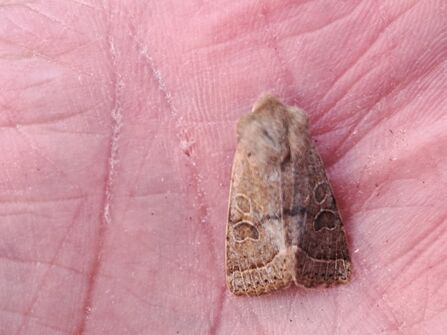
Common quaker moth by Henry Stanier
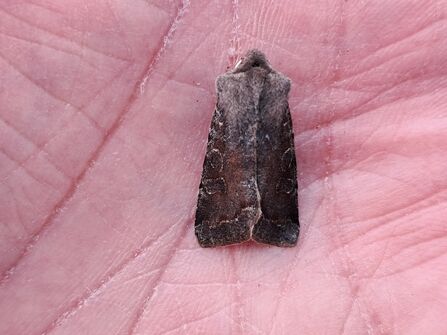
Clouded drab moth by Henry Stanier
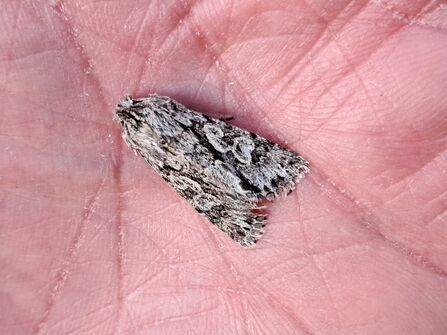
Early grey moth by Henry Stanier
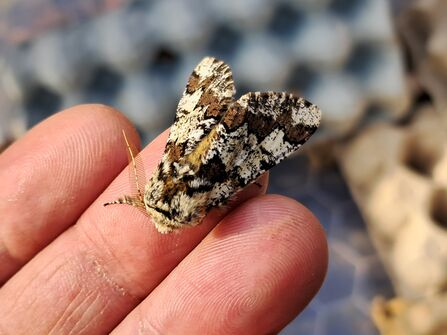
Oak beauty moth by Henry Stanier
Mammals are becoming more noticeable, and tracks and signs are appearing more frequently in the mud around our water bodies, or along paths after recent rain. You might spot these mammals during the day, on an early morning or evening walk; you never know what you may be lucky enough to see. In the meantime, we have the Fen under surveillance, and sometimes we capture a glimpse of our more secretive but inquisitive residents!
Henry Stanier (Great Fen Monitoring & Research Officer)
Spring otter inspecting a trail camera (https://www.youtube.com/watch?v=c2J65UFoHvw)
Spring otter inspecting a trail camera at the Great Fen, by Henry Stanier