Planting a meadow carpet for moths

Planting a meadow carpet for moths

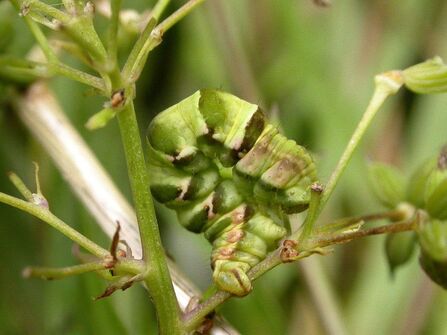
Common meadow-rue. Credit: David Gould/Common Meadow-rue | NatureSpot

The Marsh Carpet Moth is a beautiful yet nationally scarce species, short on suitable habitat. Catherine Weightman introduces us to an exciting new planting scheme, hoping to see local numbers flying high!

Since retiring last year, I have enjoyed volunteering for Natural England and the Wildlife Trust at the Great Fen. One key project has been in support of the Marsh Carpet moth.

I did not know much about the Marsh Carpet moth (Gagitodes sagittata) other than it's a highly distinctive and very attractive species, but unfortunately extinct at the Great Fen. In recent years, the Marsh Carpet has also been lost from Yorkshire, Nottinghamshire, Lincolnshire and many sites in East Anglia. They do, however, occur in low numbers locally and in other wetland habitats in East Anglia.

If you're fortunate enough to catch sight of one of these rare invertebrates in flight, it will likely be between late June to July. If you're looking for larvae, they feed from July to September on the ripening seeds of common meadow-rue (Thalictrium flavum). 
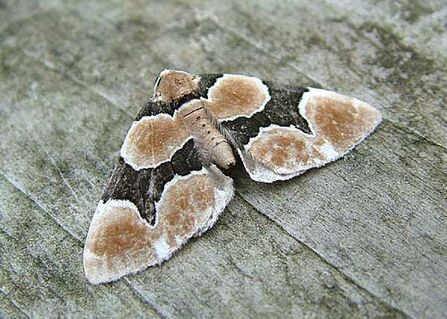
I haven't seen the adult moth yet, but last September, my friend Sharon Hearle, (just retired from Butterfly Conservation), took me to Santon Downham to see the larvae and get an idea of what habitat the moths like. Unfortunately, Marsh Carpet moths are limited to common meadow-rue as their only food plant.  For survival this is a risky game, especially with it no longer being so common. With the drainage of the fens, intensification of agriculture and increase in chemical applications, suitable habitats for the plant are hard to find. Finding plants that survive past September is another challenge. This beautiful wildflower is often mown, overgrown by reeds or eaten by grazing animals, meaning the caterpillars do not survive.

Common meadow-rue grows tall, reaching a height of 1m or more. It may surprise you that the dense masses of small, pale yellow flowers actually have no petals. Instead, they're made up of tufts of yellow stamens. The further you delve into a species the more intriguing it becomes. I learned that common meadow-rue may have different sub-species and we don’t yet know for certain which the Marsh Carpet moth prefers. 

There are very limited wetland sites left in the fens. Large-scale peatland restoration sites such as at the Great Fen and Wicken Fen (where the moth is seen annually) are going to be essential if we are to see the Marsh Carpet Moth flying here again. It's such an attractive species, I would like to see the adult flying. But before we consider re-introducing it (with habitats so fragmented, it will probably not return naturally), our first step must be to re-establish the meadow-rue food plant in a wet meadow. Encouragingly, there are old records of Marsh Carpet moth from Woodwalton Fen NNR and the purchase of neighbouring Darlows Farm in 2002 gave us a viable location to work with. 

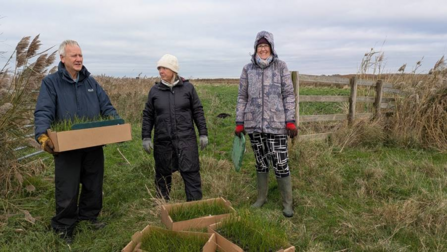
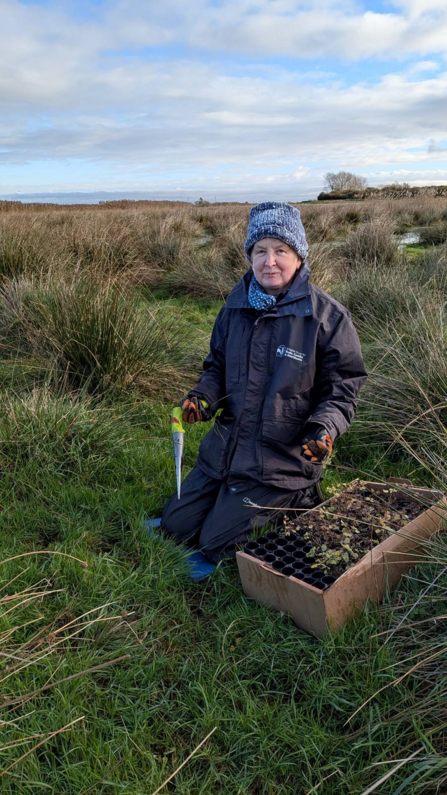
In the last couple of years, volunteers have been collecting meadow-rue seeds. With funding from the Nature for Climate Peatland Restoration Grant, via the Fens East Peat Partnership, we paid for a specialist nursery, British Wild Flower Plants, to germinate them. They successfully delivered 2300 plug plants!  Over the last year, I have been inviting others to join me in planting our new moth meadow. Fortunately, many local people were happy to help do something positive for nature and keen volunteers were quickly recruited, including Kate Carver, the former Great Fen Project Manager.

We will have to wait until later in the year to monitor the success rate of the meadow-rue and the other 10,000 plug plants put in at Darlows in October 2024! These included Water Mint (Mentha aquatica), one of the food plants for the rare Tansy Beetle (Chrysolina graminis). If we can learn more about establishing meadow-rue through this project, it is hoped these lessons can be applied to a habitat extension area at Wicken Fen too. Keep following the Great Fen's social media and blogs for updates. 

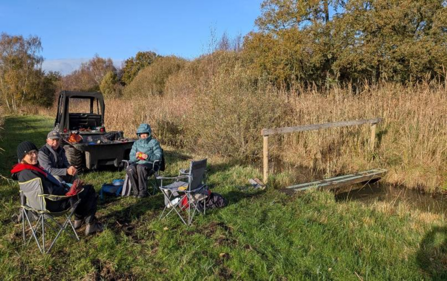
Often, practical conservation tasks involve cutting back vegetation so taking part in seed collection, plug planting and subsequent monitoring is a welcome change.  The work parties at Woodwalton or Holme Fen National Natural Reserves do help me to keep active every Wednesday.  More help is always required and if you would like to volunteer for Natural England or the Wildlife Trust at the Great Fen, please get in touch.