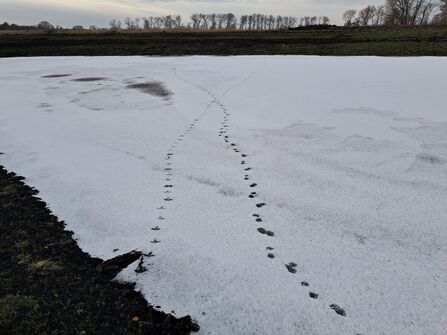
Once again, a recent spell of mild weather has stimulated various bird species to give song, including great tits and skylarks. While out in the Great Fen over the weekend, fellow staff members and volunteers managed to find a window in the wet weather to do some monitoring.
Since the ground and water have unfrozen, jack snipe and snipe have been using some of the wetter sites in the Great Fen, probing the soft earth for invertebrates with their sensitive bills. In the woodlands, their larger relative, the woodcock, has increased in number in recent weeks, as more birds fly in from the continent to enjoy of milder weather conditions.
At this time of the year, waterfowl are very noticeable, flying back and forth in the evening, as well as being out on the water during the day. Other flocks of birds are around, ranging from rooks and other corvids (members of the crow family), to lapwings, starlings and finches. This, of course, attracts the attention of predators, such as merlin and peregrine.
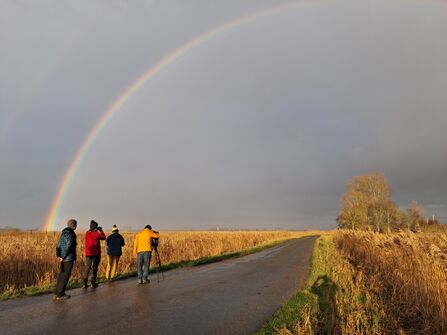
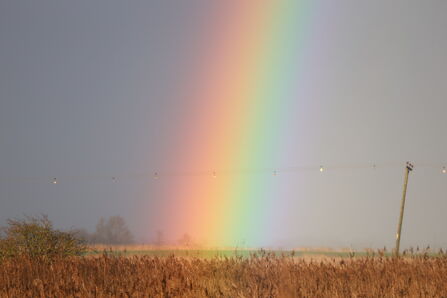
If you watch out for raptors in the early evening, you may also spot some of our resident barns owl on the wing, and over the weekend (as part of our Wildlife Training Workshop programme) we befitted from a calm Saturday afternoon, and enjoyed watching birds of prey, and well as a rainbow and a stunning sunset.