New wetland at New Decoy (https://www.youtube.com/watch?v=oAax4F25k34&t=1s)
Lorna Parker, Great Fen Project Manager, introduces the new wetland at New Decoy.

New wetlands at New Decoy - Helen Bailey
New wetland at New Decoy (https://www.youtube.com/watch?v=oAax4F25k34&t=1s)
Lorna Parker, Great Fen Project Manager, introduces the new wetland at New Decoy.
New Decoy first came into restoration during 2010. Since then, this area of land has seen a few changes. Initially arable farmland, it then became grassland, where hay has been taken and livestock grazed. Over the last few months another landscape-scale transformation has been in progress, creating our newest wetland. Funding for this next phase of work came from the Natural Heritage Lottery Fund as part of the Peatland Progress project and from the Fens East Peat Partnership through the Nature for Climate Peatland Grant Scheme administered by Natural England.
This latest stage will eventually provide an accessible window for members of the public to experience a mosaic of wetland habitat as well as the wildlife that this landscape will attract.
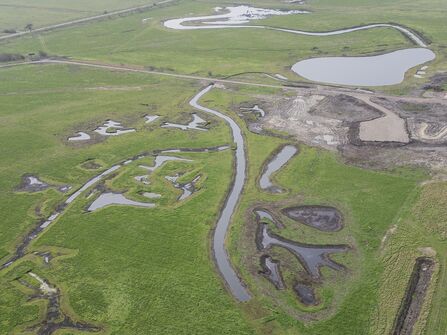
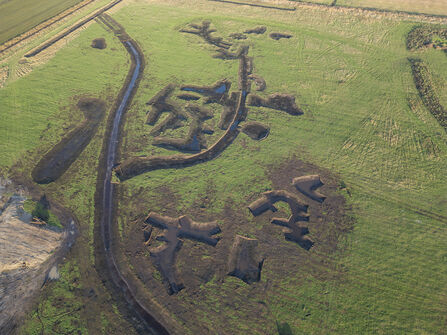
New channels at New Decoy - Helen Bailey
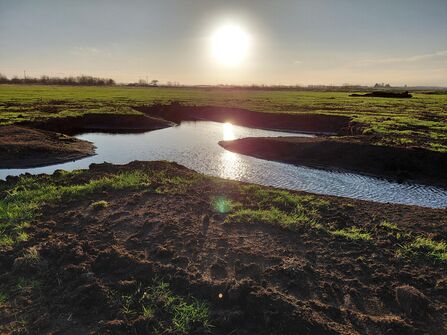
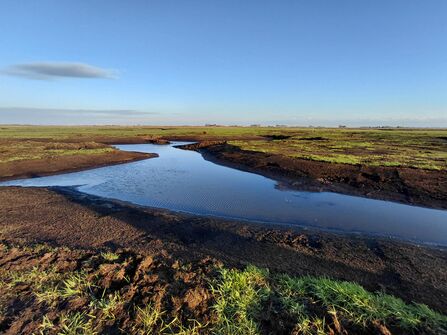
New wetland at New Decoy - Holly Wilkinson
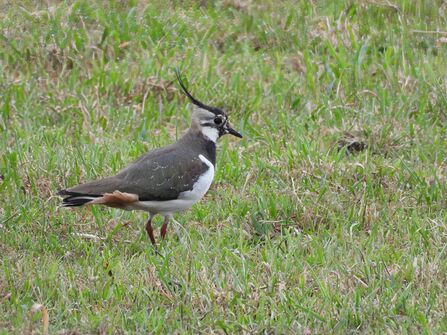
Lapwing - Jasmin Atkinson
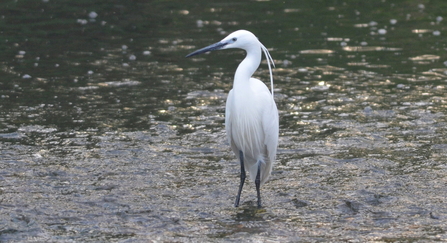
Little egret - Adam Jones
A large shallow pool has been created, as seen in this earlier video. Before the diggers had finished, it was already attracting shelduck, greylag geese, lapwing, little egret and oyster catcher.
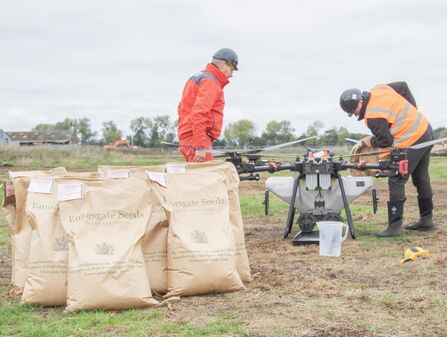
There are also many shallow channels spreading out across the site. These allow water to be distributed across the fields rather than being confined to ditches around the edge. The channels have been designed to work with the land and have been created where water will naturally hold. These wetter areas will create conditions suitable for plant species that favour such conditions. Most of the site has been sown with a special Great Fen grassland mix, delivered by a state-of-the-art agricultural drone from AutoSpray Systems. This mix was designed with Emorsgate Seeds and specifically for conditions in the Fen, along with some native flowering plants to attract pollinators.
New channels at New Decoy - Helen Bailey
New water storage added to New Decoy - Holly Wilkinson
New channels being created at New Decoy - Holly Wilkinson
A specialised wet meadow seed mix from Emorsgate Seeds was distributed by an agricultural drone from AutoSpray Solutions - Holly Wilkinson
A specialised wet meadow seed mix from Emorsgate Seeds was distributed by an agricultural drone from AutoSpray Solutions - Holly Wilkinson
The development of the vegetation, along with bird movement and presence of other wildlife species, will continue to be monitored. This will allow us to track changes over time and will highlight any areas where management needs tweaking to best suit wildlife.
Water levels will also be monitored by a series of dipwells installed across the site.
Although currently full of water, some of the channels will naturally dry out over the summer months. The water levels will be maintained close to the surface where possible, so although the channels will look dry, the soft soil will still be suitable for birds to probe for food.
New Decoy is skirted by the Dragonfly and Last of the Meres walking trails. Now the diggers have finished, the Great Fen Reserves team are busy preparing footpaths ready to welcome back visitors later in the year. Please keep watch on our social media pages for news of paths reopening.

Speechly's Farm in its previously farmed state next to restoration land at Middle Farm - Henry Stanier
It doesn’t end there though. The Great Fen team is now preparing to start work on Speechly’s Farm, land that was purchased in 2022. Over recent decades, this 127ha sized area has undergone subsidence through drainage, compaction and peat oxidation. Raising the water table will help protect the peat soils and reduce the loss of carbon.
The new scheme will create a mixed mosaic of reedbed and open water with the development of fen and grazing marsh habitat where associated species will steadily move in.