
Farm to Furniture was a free, four-day furniture design workshop at the Ramsey Heights Nature Reserve. This brand new summer school was organised in collaboration with London-based art school STORE. Designer and material scientist Georgemma Hunt, and designer-builders, Flimsy, joined the students to experiment with materials made from wetland plants, and to design and prototype functional, playful furniture.
Farm to Furniture - Summer School Success

Tutors and students of the 2025 STORE summer school in furniture design.
In 2025, we hosted an exciting new summer school with art school STORE. Students experimented with materials made from wetland plants to design and construct their own furniture.
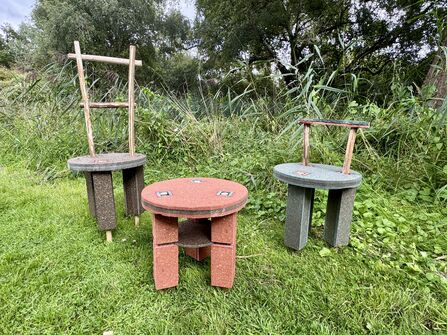
Examples of furniture made from paludicultural products. Designed and constructed during a STORE summer school workshop in the Great Fen. Credit - The Wildlife Trust BCN.
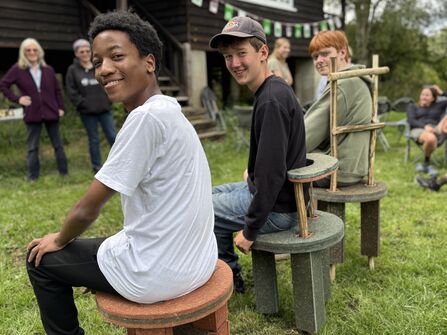
Three of the summer school students testing their furniture designs. Credit - The Wildlife Trust BCN.
"In the Cambridgeshire Fens, where wild wetlands once supported rich biodiversity and stored carbon, the land has now been altered into a dry arable farm-scape." explains Georgemma. "Draining the Fens causes the decomposition of 1-2cm of peat every year. This incredible carbon sink is being lost 10-20 times faster than it has historically been built up.
"Paludiculture (farming on wetter peaty soils) promises new hope. It balances the demands of modern agriculture with the need to reduce carbon emissions. Researchers are investigating several wetland crops that can be farmed on wet peat soils and used in novel applications across industries including textiles, construction and design.
We introduced the students to materials constructed from crops harvested at European paludiculture farms. These are plants that grow in wet peat, meaning the peat is protected from drying out, oxidising and contributing to climate change."
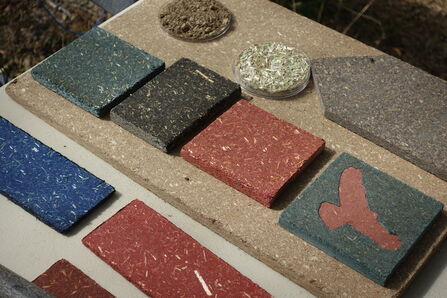
Board samples made from paludicultural materials - STORE
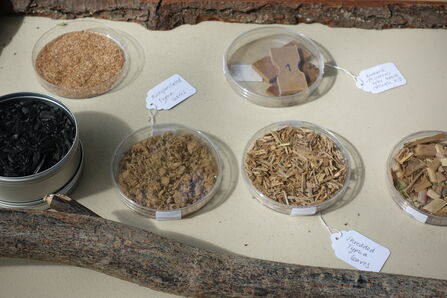
Small samples of a variety of paludiculture materials that can be used to make construction boards - STORE
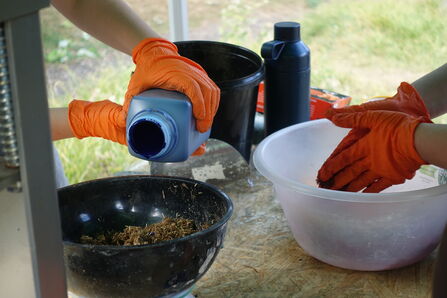
Students learned to mix plant materials to create particle boards - STORE
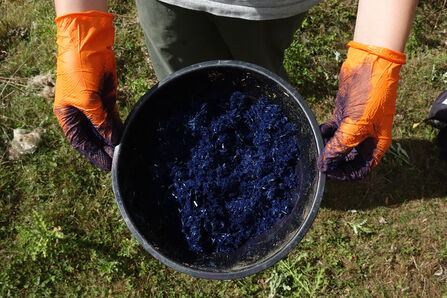
Mixing materials to make particle boards - STORE
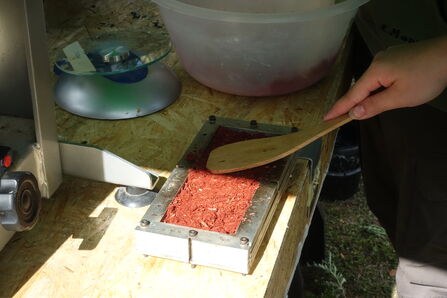
Students learned to make fibre boards - STORE
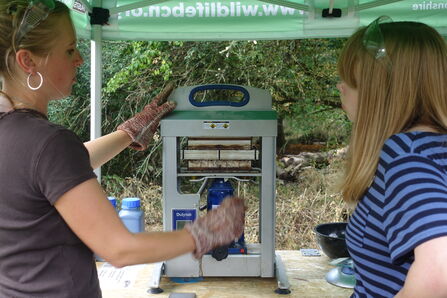
An hydraulic heat press is used to compact the plant fibres into boards - STORE
The students, aged 14-18, worked together to develop their concepts. They learned to use new tools, machinery, and how bio-based materials are driving landscape regeneration across farms in the Fens.
The particleboards used in the final stools were produced by Zelfo Technology in Germany, as an early demonstration of what form these binder-free, biobased materials could take.
“Before working with Zelfo Technology's prototype particle boards, we got hands-on with the production of our own,” explained Amy Grounsell, Architect, Flimsy Works. “Using pre-processed wetland grass fibres from rewetted peatlands, they learned to mix, pour and heat-compress the material into fibreboard, without the use of any glues as binders. We experimented with different colours and configurations of wetland fibres.
“The finished designs also featured coppiced willow which the students learned to debark. This was used as legs, footrests and backrests – both to protect the stools from the damp ground and to give each piece a distinctive character.”
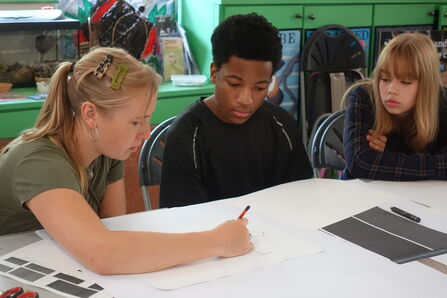
Students worked together on their designs - STORE
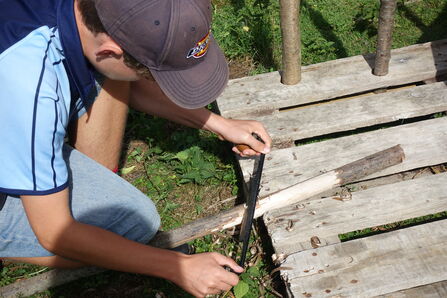
Debarked willow was used for the furniture designs - STORE
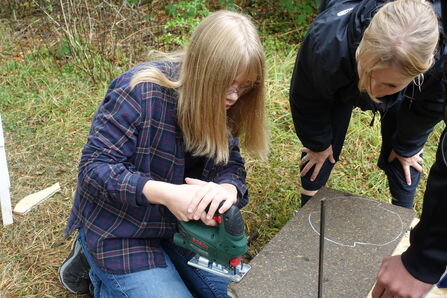
Learning to use tools to create their designs - STORE
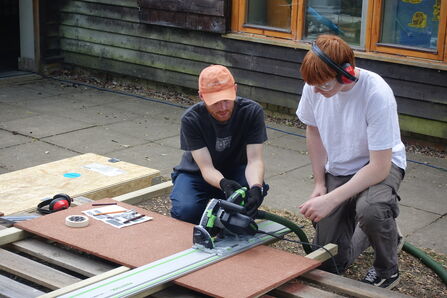
Learning to use tools to create their designs - STORE
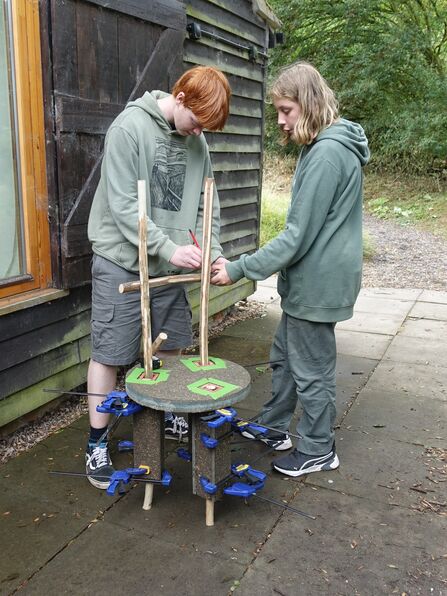
Students worked together on their furniture designs - STORE

Nokutenda Mupfupi, Summer school participant.
Nokutenda Mupfupi was one of the participants. "It was an eye-opening experience that deepened my understanding of the innovative directions sustainable design is taking," shared Nokutenda. "My key takeaways are the importance of local material sourcing, the potential of regenerative design in shaping sustainable futures, and the power of collaboration between science, design and community. Overall, this experience reaffirmed my belief that sustainability isn’t just about reducing harm, it’s about actively restoring and reimagining our relationship with the landscapes we depend on."
Sustainability isn’t just about reducing harm, it’s about actively restoring and reimagining our relationship with the landscapes we depend on.Summer School participant

Summer school tutors Georgemma Hunt, Amy Groundsell and Katie Einon Kamara test the finished paludiculture furniture in Woodwalton Fen NNR - Danielle Page
"It was such a pleasure to work on the 'Farm to Furniture' Summer School," said Georgemma. " Our young students were brilliant — so engaged, creative, and eager to get stuck in with material experimentation and furniture assembling! We loved seeing their ideas come to life, in the first furniture application of binderless wetland grass particleboard. Their impressive final pieces were exhibited at London Design Festival 2025!"
The stools will now tour with the Great Fen's Mobile Inspiration Hub. This tiny-house is made with paludiculture materials too, bringing the real-world application of paludi-products to you at agricultural shows.
"This event will forever be one of the highlights of Peatland Progress for me," said Lorna Parker, Great Fen Project Manager. "Watching the young people learn and thrive on the workshop and then share their achievement and sense of pride with an audience at the end was uplifting."
The summer school was delivered as part of Peatland Progress. Our thanks to the National Lottery Heritage Fund for their support that enabled us to offer this incredible opportunity for free.

The finished prototypes - STORE

A curved-back chair made from paludiculture fibre-boards and willow - STORE

A red stool made from paludiculture fibre-boards and willow - STORE

A ladder-backed chair made from fibre boards and willow - STORE
Just to see young people engaged and involved with innovative makers was emotional and electrifying.Summer School participant

Students and tutors of the Farm to Furniture Summer School
The 2026 Summer School is now open for applications. Visit 'Furnishing the Fens'. This time we'll be designing and building a display cabinet from past, present and future wetland plants.
