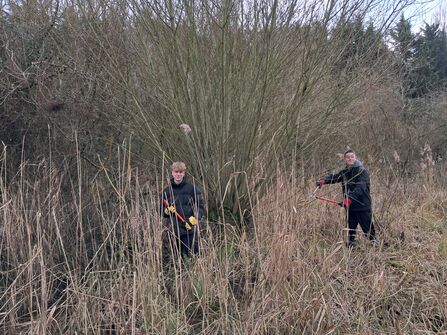
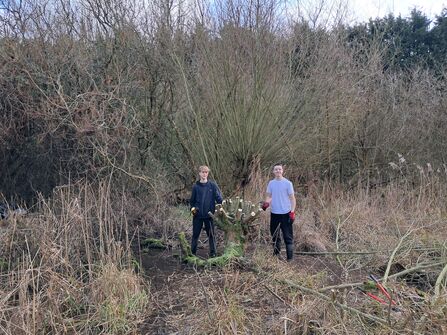
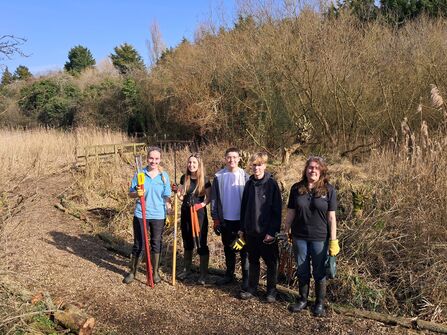
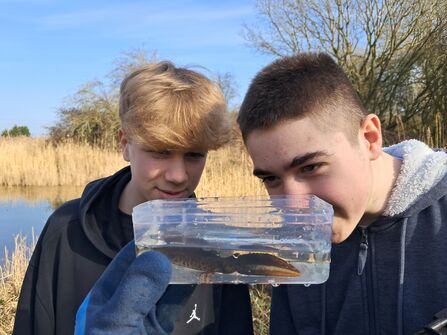
Once again, Ramsey Heights Nature Reserve has been the focus for habitat management, as a result of great crested newt monitoring last year. Ponds naturally develop from open water bodies with little vegetation to densely vegetated and shaded habitats. This progression supports a changing collection of wildlife, but we reset the process from time to time, so we have a range of such habitats on a particular site at any one time.
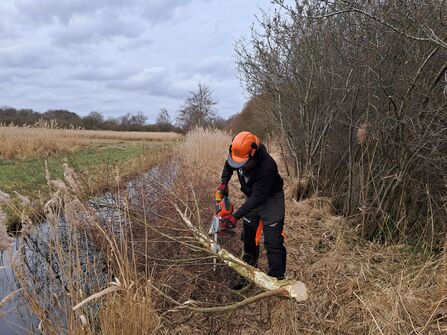
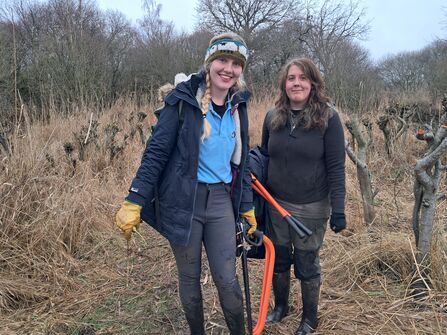
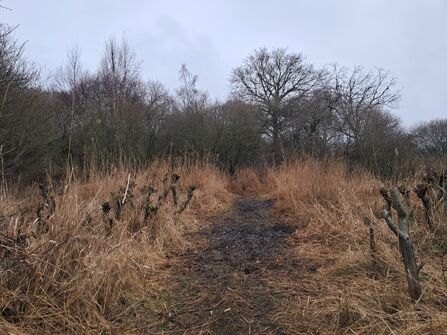
Clearing back brambles and cutting back encroaching scrub and trees is just one example of the work done over the winter. This allows the shallow water at the edges of ponds to warm up quickly as temperatures rise, speeding the growth of newly hatched amphibians. Species of willow, and other trees and shrubs, can be cut to about waist height (a method called pollarding) to maintain the tree but still let light in. This management also allows us access, to monitor the newts safely and demonstrate to visitors how we do it.