Youth in Nature - A BTO Summit review

Youth in Nature - A BTO Summit review

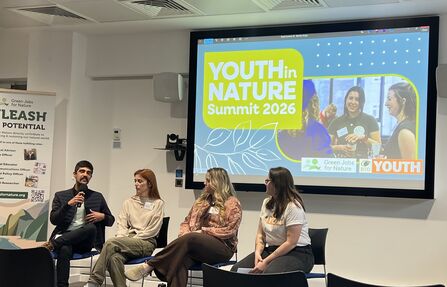
Panel speakers at the Youth in Nature Summit

For young people interested in a career in conservation, there are numerous routes to try. Peatland Progress trainee, Katie, highlights some of the opportunities and advice they encountered at the BTO Youth in Nature Summit.

As trainees at the Wildlife Trust for Beds, Cambs and Northants, we hope to represent the next generation of conservationists looking for our place within this diverse job sector. The Peatland Progress project has offered us the opportunity to work within the Trust as well as attend larger multi-organisation events, such as the British Trust for Ornithology’s (BTO) Youth in Nature Summit.

The Youth in Nature Summit was organised by the BTO Youth Advisory Panel and Green Jobs. Its purpose was to bring young people together for a two-day event packed with presentations, debates, networking-opportunities and workshops made to provoke discussion around people and nature. We attended to be a part of this hub of conversation surrounding the future of conservation.

Katie and Kaitlyn take a selfie in front of a BTO Youth roller banner

Katie and Kaitlyn, Peatland Progress trainees, at the BTO Youth in Nature Summit

Day One - Communications, Reintroductions and Diversity

Kaitlyn and I arrived at the David Attenborough Building in Cambridge. This building is home to the Cambridge Conservation Initiative, providing a communal workplace for eleven major conservation organisations. The conference itself was spread across three floors; the first for workshops and talks, the second for mentoring, and the third for a careers fair.

We began the day listening to young author and science communicator, Sophie Pavelle. Sophie spoke about her journey around the country re-connecting with ten iconic UK species at risk from climate change, as featured in her book Forget Me Not (2022).

We went our separate ways for the rest of the morning; Kaitlyn attending a workshop on conservation campaigning through creative communication and myself at a workshop on species reintroductions.

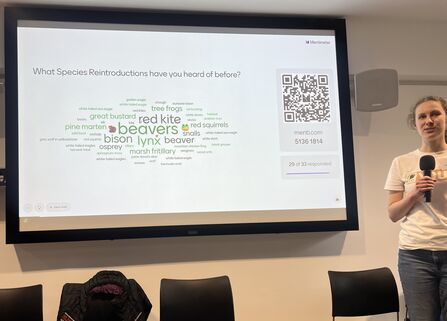
Species reintroductions receive mixed responses in the UK so I was intrigued to hear how organisations broach this. Two workers from the Forestry Commission talked about reintroducing Hairy wood ants and White-tailed eagles. Josh Styles from Styles Ecology Ltd. then spoke about reintroduced bog species, such as Papillose peatmoss (Sphagnum papillosum). Josh shared how surprisingly few sphagnum moss species actually create peat and that many are now locally extinct throughout England.

During a networking game of ‘Snakes, Barriers and Careers Ladders’, we got to meet a range of individuals working for NGOs such as the International Union for Conservation of Nature (IUCN), Zoological Society of London (ZSL), Chartered Institute of Ecology and Environmental Management (CIEEM) and the RSPB.

There were familiar faces at the conference too. Aaron, one of the Wilder Luton trainees appeared on the Diversity In Conservation panel, along with fellow radio presenter on Inspire FM’s Nature Show, Raheed Salam. Aaron spoke of both the challenges and successes surrounding inclusivity and representation within the conservation sector.

Conservation isn’t just for scientists, and artists’ work can be equally important in the field.
Katie Bolton
Peatland Progress trainee

Day Two - Art in Conservation and Careers

We began the day with an inspiring talk from Elle Kaye, an award-winning bird-taxidermist and wildlife communicator. Elle shared her struggles to connect with wildlife and then find her place within the wildlife sector and how she united her passion for art and natural history as a taxidermist. She spoke of the challenges of being a women in the field. Despite all she's contented with, Elle has founded one of the largest women’s bird-watching groups in southern England and continues to talk about and educate others on her work and taxidermy as a whole.

I deeply respected Elle’s willingness to share her hardships in conservation and could relate to her as an artist myself. During university when selecting a career path, I was confronted with how highly competitive both art and conservation were. Motivated by a need to ‘do something more’, I resolved to dedicate myself to conservation but sadly neglected my passion for art in the process. However, Elle’s talk cemented the realisation it has taken me years to come to: conservation isn’t just for scientists, and artists’ work can be equally important in the field.

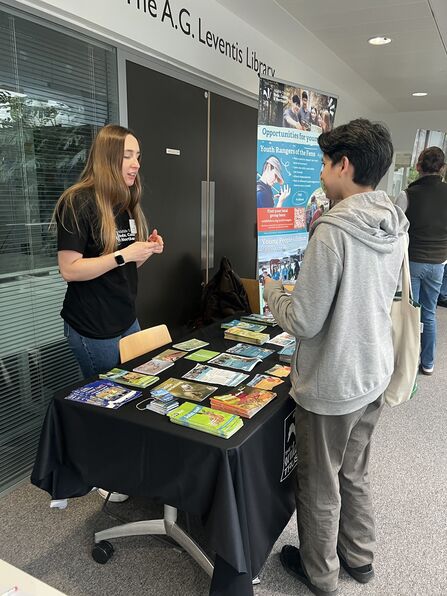
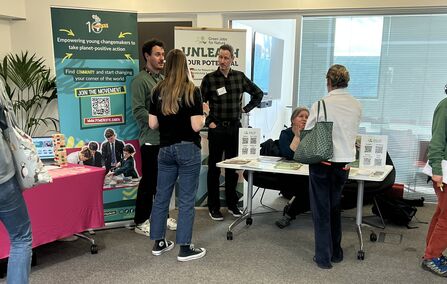
Later, we were asked to represent the Wildlife Trust BCN at the event’s Careers Fair. This was a fantastic opportunity to interact with even more people, providing them with information on what the Trust does, the array of volunteer opportunities suited to individual interests, and upcoming jobs for young people (e.g. future Peatland Progress traineeships).

We all thoroughly enjoyed the event and came away excited about the opportunities in conservation that could come our way. At the same time, throughout the event I often questioned, “How many young people would be here if this event wasn’t free?” How many future conservationists may not have been presented with the opportunity to meet other like-minded and diverse individuals, get face-to-face with the large organisations leading the charge, seek new opportunities and gain new skills at the summit’s workshops - all due to financial barriers. We congratulate the BTO Youth in Nature Summit organisers on creating this accessible event and hope many more young people find their way into conservation, from any direction that best suits their skills and passions. 

National Lottery Heritage Fund Logo

National Lottery Heritage Fund Logo

Peatland Progress traineeships are made possible thanks to the National Lottery Heritage Fund.