
As Peatland Progress trainees, we’re lucky enough to spend time across different teams to build up a wide range of skills and experiences – and we’re not just restricted to work within the Trust! Matt Hayes, a member of the Wildlife Trust BCN’s Board of Trustees, works as a Research Assistant at the University Museum of Zoology, Cambridge. Matt kindly showed us around the museum, giving us a behind-the-scenes tour and teaching us about some of the incredible research and community projects taking place there.
Going Behind the Scenes at the Museum of Zoology

Fin Whale Skeleton on display at the Cambridge Museum of Zoology.
Ellen Blackmore shares the Peatland Progress trainees' latest collaboration, with the University Museum of Zoology, Cambridge. A behind-the-scenes tour, assisting with research and participating in a brand-new accessibility project, with Matt Hayes, Research Assistant and Wildlife Trust BCN trustee.

A Great Silver Water Beetle on display at the Cambridge Museum of Zoology.
Unsurprisingly, the museum houses an enormous collection. Thousands of specimens are displayed across the entire animal kingdom, from mammals and birds to reptiles and insects. The displays even include specimens discovered by some of the great naturalists, including Alfred Russel Wallace and Charles Darwin. In fact, the museum’s collection contains approximately two million items. Around 99% of these are not on public display and are instead kept in one of five purpose-built, climate-controlled storerooms. These specimens are available for academic study by researchers and students from around the world, and we were lucky enough to go behind the scenes and see some centuries-old specimens up close. The specimen above is of a great silver water beetle (Hydrophilus piceus), a red-list species the Great Fen was thrilled to rediscover here, recently.
Sorting Specimens
We were soon put to work helping with the museum’s research, using microscopes to sort various mini-beasts into their different taxonomic groups. These invertebrates had been collected using pitfall traps across different sites, and it was fascinating to see how the diversity of specimens varied depending on which site they had been collected from. I particularly enjoyed developing my invertebrate identification skills while simultaneously contributing to the museum’s ongoing research.
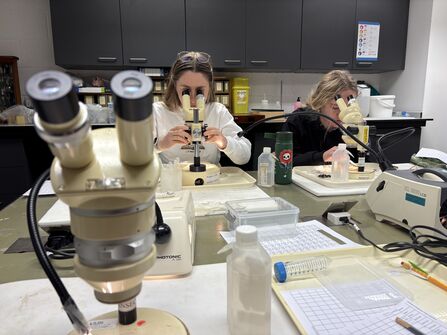
Trainees Ellen and Katie sorting invertebrates from pitfall trap samples.

Peatland Progress Trainee Ellen sorting invertebrates.
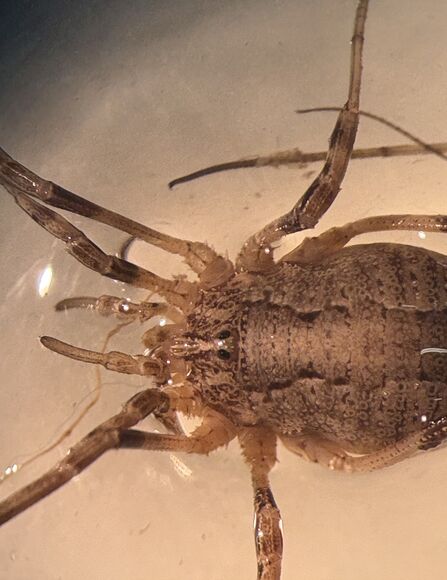
Harvestman specimen under microscope
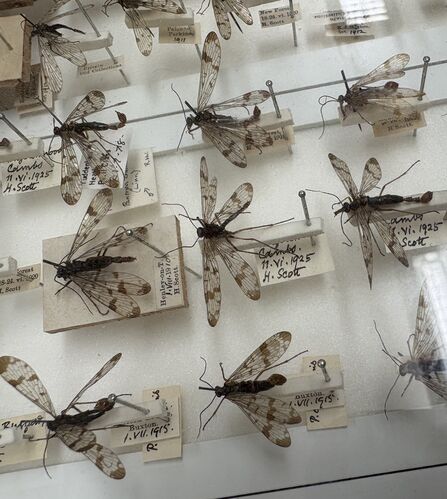
Scorpion fly collection at Museum of Zoology
Future Collaboration
An exciting next chapter in the Wildlife Trust's relationship with the University Museum of Zoology, Cambridge is a new project called Reimagining Insects. Funded by the Esmée Fairbairn Foundation, the aim is to increase access to museums and wildlife for more diverse audiences. Many groups – including blind and partially sighted people – can face significant barriers when engaging with the natural world. This project uses new scanning and 3D printing technology to support engagement with small, fragile specimens such as insects. By creating large, tactile models, the project aims to make these specimens more accessible to blind and partially sighted audiences while developing an engaging tool that everyone can benefit from.
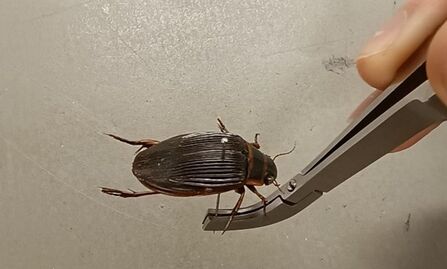
A real great diving beetle specimen from the University Museum of Zoology in Cambridge, held by its mounting pin using forceps.
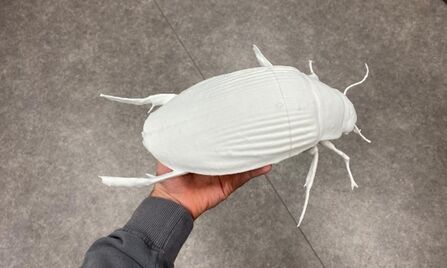
A larger-than-life 3D printed model of the same great diving beetle specimen held in the hand.
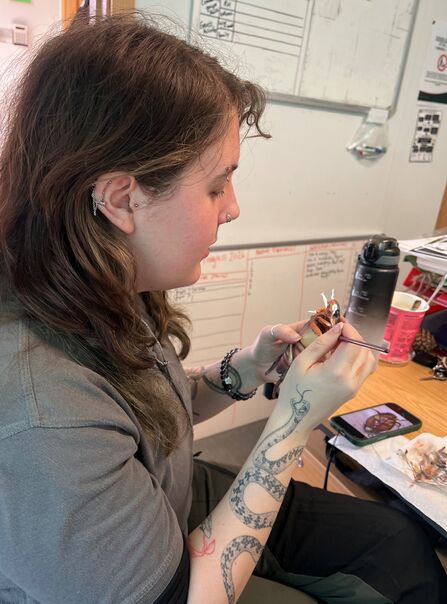
Peatland Progress trainee, Kaitlyn, hand-painting a water beetle model.
As trainees, we were able to support the early stages of the project. The first test prints were giant 3D models of water beetles, which we painted to accurately reflect the colours of different species. These models were included in the Great Fen's display at the ‘Water Worlds’ exhibition at St Wendreda’s Church. By sharing our skills and resources, we have been able to engage audiences with the natural world in a more accessible way, and we look forward to continuing this collaboration in the future.
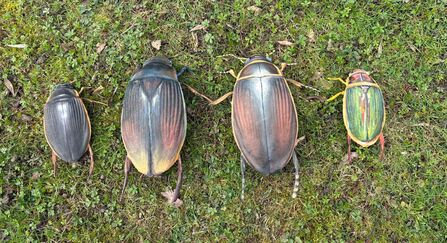
The finished 3D printed, hand-painted water beetle models.
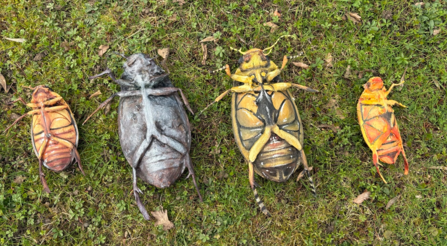
The finished 3D printed, hand-painted water beetle models.
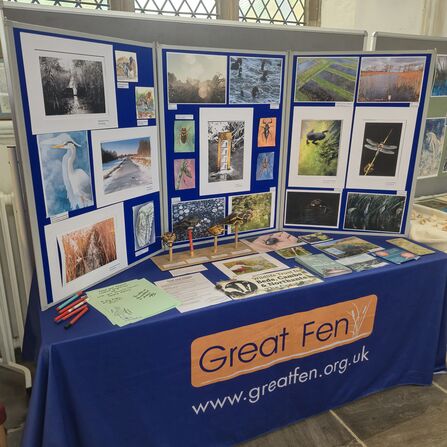
The Great Fen stand at St Wendreda's Church Water Worlds exhibition.
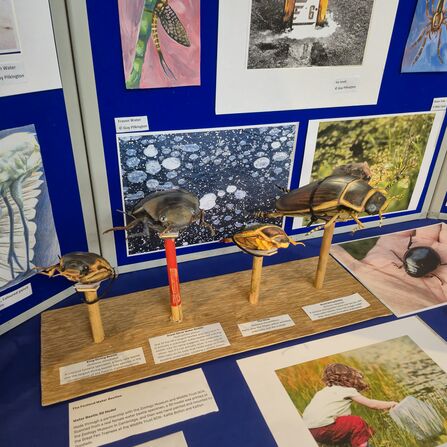
3D Models of water beetles printed by the Museum of Zoology and painted by Trainees at the Great Fen, on display at St Wendreda's Church Water Worlds exhibition.

National Lottery Heritage Fund Logo
Peatland Progress traineeships are made possible thanks to the National Lottery Heritage Fund.
