In Deep Water with our New Trainees

New Peatland Progress communities and education trainees, Aimee and Jake. 

We caught up with our latest Peatland Progress trainees, Aimee and Jake, to hear some of their (sometimes soggy) highlights from the first few months on the job!

A big warm welcome to our latest Peatland Progress Trainees at Ramsey Heights! Tell us a little about yourselves.

A: I'm Aimee. I graduated from the University of Birmingham with a Geography degree in summer 2025, and have been searching for opportunities to develop my skills and pursue a career in conservation.

J: I'm Jake and I am thrilled to be part of the team. In my spare time I love birdwatching, bird ringing, supporting wildlife craft events and Youth Ranger sessions.

A: Since starting the traineeship at the end of June, we've had the opportunity to work with different teams within the Great Fen and throughout the Trust, and develop many of the skills that I was eager to gain. Everyday has been different and I've loved meeting and working with people across the trust.

We're delighted to have you both with us. What have been some of your highlights from the first few busy months? 

A: Being based in the Great Fen Communities & Education team means that we get to assist with many events and visits, and meet members of the local community. Being able to see first-hand the positive impact that nature and wildlife can have on individuals and groups has been really powerful and inspiring. 

One of my favourite events was the community pond dipping day in Waterbeach. We were visited by families local to the area who wanted to get stuck in and learn more about the bugs that live in their local ponds and what they might suggest about the water quality. Many of the families had attended in previous years, so it was great to hear what they remembered learning about and seeing in their nets! 

J: Absolutely one of my favourite days too, helping all the families catching many different pond creatures and showing them up close under the microscope. 

We love pond dipping! What did you find?

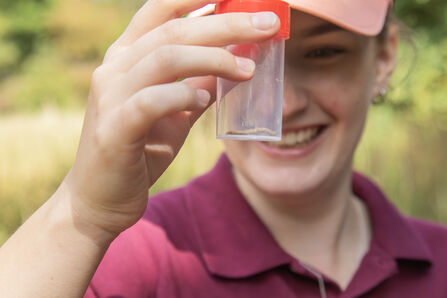
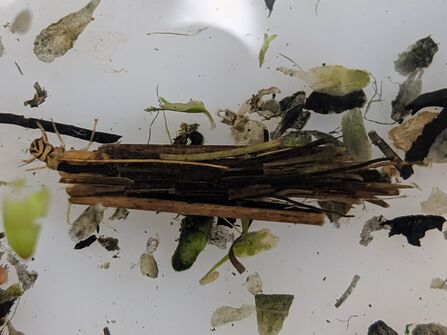
A: A particular favourite amongst the groups (and for me!) was seeing the many cased-caddisfly larvae we could find wandering around the trays, and noticing how they looked like moving sticks! This event gave us an amazing opportunity to teach families about the ecology of their local ponds, and why they are important habitats to protect. 

J: Some of the highlights were diving beetles, water boatmen, dragonfly nymphs, mayfly nymphs, a little fish, a water scorpion and a newt! I pointed out some of the bird species to the families taking part on the lake we were pond dipping at, we saw coots, mallards, moorhens and a Mute swan and there were many dragonflies and other insects hovering above the water. The weather was perfect for pond dipping and being out in nature.
What came next for you both? 

A: Other standout events for me include our busy Youth Week in August. With our conservation experience day, Youth Rangers session and Young People's Forum meet up, we were able to engage with lots of young people across Cambridgeshire. As a trainee progressing into conservation myself, it is really important to me to support other young people getting stuck into nature who may want to develop skills to progress into the field in the future. 

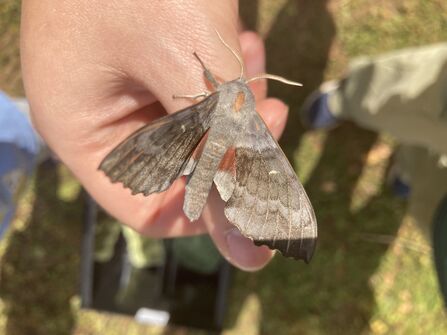
J: One magical day was when I helped with the Wild in the Woods event at Ramsey Heights nature reserve. I got to show all the children who took part all the moths we had caught in our moth trap. Some of the highlights were the Brimstone butterfly, Buff-tip moth, Setaceous Hebrew character moth and the Poplar hawk moth. The session was good experience for me and one which I really enjoyed. 

Have you worked with other Great Fen team members?

A: Yes! Another exciting aspect of being a Peatland Progress trainee, is getting the opportunity to join different teams, including the Monitoring & Research and Reserves teams, and meeting people across the wider Trust. One of the highlights for both of us has been joining the Great Fen Monitoring trainees and volunteers in completing water vole surveys. 

How exciting! What does that involve?

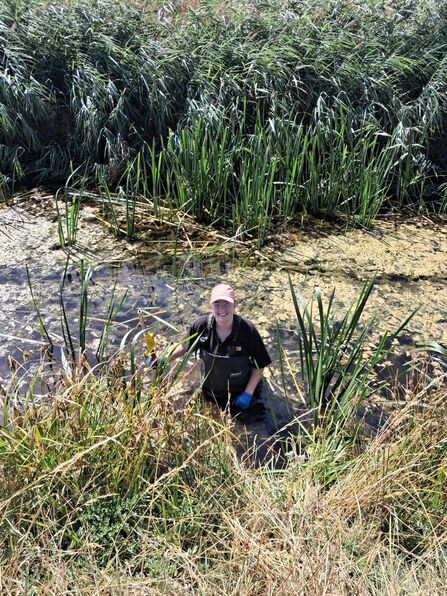
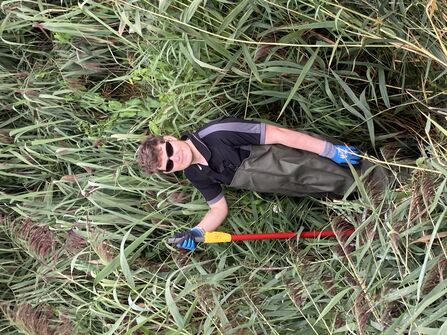
J: I was eager to try this by myself for the first time. I had brought my own waders which proved very useful as the water level was quite high, and I had gloves on for pushing past brambles. We were given a pole to move the reeds apart in order to wade through and advised to look out for a range of different signs that water voles had been feeding or living there. 

Any luck finding anything?

A: With encouragement from Maisy and Dan (monitoring trainees), I was able to get stuck in (literally!) and wade through some of the wet ditches looking for signs that water voles lived there. Luckily for me, I saw lots of burrows and even saw a water vole swimming near me into one! 

J: Yes, it was hard work wading through the boggy ditches and pushing aside the reeds! Now I know what to look for, I spotted many water vole signs, such as droppings and nibbled leaves. It increased my confidence working with the other Trainees, communicating with each other clearly so that while I’m surveying the ditch my colleagues were able to record what I’ve seen. And now I have experience now of wading through wet ditches!  It was a very fun day and I am much more knowledgeable about water vole surveys and knowing the signs to see if they are using the habitat. 

Are water voles the only wildlife you've surveyed?

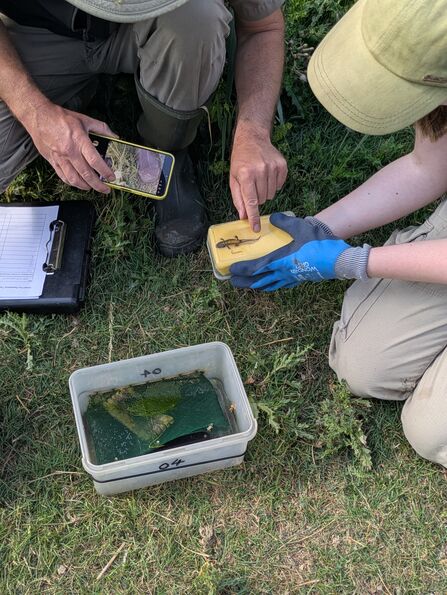
A: I also got to learn about another exciting protected species, the Great crested newt, which we have a lot of in our ponds at Ramsey Heights Nature Reserve. I joined Henry, the Great Fen Monitoring and Research Officer, to learn about how they sample and monitor the newts, including being able to identify individuals by the unique pattern of spots on their belly!

Which other teams have you worked with so far?

J: An activity I really enjoyed was working with Rob Mungovan from the Wild Trout Trust. Ruth Hawksley, Wildlife Trust BCN's Water for Wildlife Officer helped organise the session and kindly invited us along. We were creating brash ledges in the River Granta at Linton Pocket Park.  I learned these add diversity to the river channel and provide complex habitat for juvenile fish and other wildlife.

That sounds like another wet job for you! What did you do there?

J: First, I used loppers and secateurs to cut up branches of wood. These were placed in the river to create the brash ledges. To fix them in place, I used the spike pole to dig a hole down into the riverbed and grind the gravel to then place and bash in wooden stakes. These hold in the brash branches with the rope tied over the top. I also used other tools including hammers to bash metal pegs round the rope and into the wooden stakes to keep the ledge secure. I had a great time working with the volunteers and Ruth. It boosted my confidence in working with different people, using different equipment and knowing how to protect vital chalk stream rivers. 

Two men in waders in a river building brash ledges

Building brash ledges for wildlife with the Wild Trout Trust

It sounds like you've both had some fantastic experiences so far! How have you found these first few months overall?

A: I can't believe the number of wonderful and unique opportunities I've had to learn and contribute to the Trust. It's been difficult to narrow it down to a few highlights! Communities and Education is such a fulfilling team to be a part of, especially getting to support children coming to our events who may not know about their local wildlife, in learning and experiencing nature first-hand. I am so grateful to the people who have welcomed me to join their activities and expand my experience, and I can't wait to see what else I can get stuck into! 

J: So far, my Peatland Progress traineeship has meant a lot to me, and I have had a wonderful time so far and it's been very enjoyable. I have loved working with my colleagues and meeting new staff across the wildlife trust at various reserves and meeting new people. I think it's very important to engage with teenagers and families with young ones about British wildlife and the work the Wildlife Trust BCN does to protect the wildlife we have in our counties.